


Launching a new tech product-based business in the UK isn’t easy. It’s full of uncertainty.
It doesn’t matter if you’re building a SaaS platform, marketplace, mobile app or AI-powered tool, the biggest challenge isn’t development, it’s knowing what to build, when to build it, and how to get the product to market fast without burning capital.
This guide is created specifically for UK tech founders, startup teams, and early-stage entrepreneurs who want a proven, low-risk roadmap from idea → MVP → launch → scale.
It combines real-world practices we use at Evangelist Apps with dozens of UK startup journeys, practical checklists, cost ranges, timelines, and a founder-friendly playbook you can execute immediately.
You will get a full walk-through of product development process and how you can use a third-party product development services (like the ones from Evangelist Apps) to build products from scratch without burning out.
Product Development Process Walk-through
Now, let’s understand the process in details. Some of these steps may not match your current workflow, so feel free to customize the steps accordingly.
Step #1. Start with the Problem – Discovery for UK Startups
Don’t start coding right from the very beginning. Start by getting clear on the problem you’re solving.
Every successful UK product starts with a clearly defined problem.
Before touching design or development, you must validate what problem truly exists, how painful it is, and whether users are already solving it in inefficient ways.
Your goal in this phase ⤵️
- Identify the core pain point your product solves.
- Understand how UK users currently handle this issue.
- Explore market alternatives and gaps.
Evangelist apps runs proper discovery sessions to help you focus on what matters, not on building random features no one will use.
UK-specific example:
A London-based fintech startup discovered early that small accounting firms struggled with real-time reconciliation. Instead of building a full platform, they validated the single feature accountants cared about most: automated matching saving months of unnecessary development.
📝 Founder checklist for this step:
- Speak to 10–20 UK-based potential users.
- Ask: “What is the hardest part about X today?”
- Identify inefficiencies in existing solutions.
- Prioritise the problem with the highest willingness-to-pay.
______________
Step #2. Define Your Target User & Market
Clarity about who you are building for speeds up everything later.
UK consumers and businesses behave differently across regions and industries.
What you must define in this step ⤵️
- User persona: their job role, age, goals, frustrations.
- Market segment: B2B, B2C, industry vertical.
- User behaviour: how they discover tools, what they value.
UK-specific considerations (if applicable for your product)
- Regional product behaviour (e.g., London vs. Manchester adoption speeds).
- Compliance-heavy sectors like FinTech, PropTech, HealthTech.
- Pricing differences compared to US/EU markets.
📝 Founder checklist for this step:
- Build 1–2 users personas based on real conversations.
- Map customer journeys from awareness → trial → paid.
- Validate willingness to pay via simple interviews or landing pages.
______________
Step #3. Build a Lean Product Roadmap (That You’ll Actually Follow)
Once your idea is solid, map out a plan.
A product roadmap should give you clarity on execution.
A lean product development roadmap helps UK startups avoid scope creep, delays, and endless rewrites.
What your product development roadmap must include ⤵️
- Clear problem statement
- 3–5 core features for the MVP
- Success metrics
- A realistic 3-month timeline
- Risks & assumptions (technical, legal, user adoption)
- Budget for the project
If you are opting for an app development service like Evangelist Apps, we work with you to make sure the roadmap isn’t just pretty slides, it’s something you can build from.
As per our observation working with dozens of UK-based start-ups, the fastest-growing UK SaaS companies follow a “90-day roadmap cycle,” focusing on short-term, high-impact deliverables over long-term guesses.
📝 Founder checklist for this step:
- Prioritise features with the highest impact × lowest effort.
- Break down each feature into user stories.
- Avoid committing to 12-month plans early – stay flexible.
_________________
Step #4. Build an MVP (Minimum Viable Product)
An MVP is not a simplified version of the final product, it’s the smallest possible version that validates your core assumption.
And this is where most startups waste time.
Your MVP should solve one or very few core problems and do it well.
What a strong MVP includes ⤵️
- 1–2 core features
- A clean and intuitive interface
- Minimal backend if needed
- Tracking & analytics
- Quick onboarding
Recommended UK MVP timeline: 6–10 weeks for most SaaS/mobile apps with a focused feature set.
Typical MVP cost ranges for UK startups:
- Simple mobile/web MVP: £15,000–£35,000
- SaaS platform MVP: £35,000–£120,000+
MVP checklist for building the product:
- Define “must-have” vs. “nice-to-have” features.
- Build a clickable prototype for testing first.
- Release to a small UK beta group (10–50 users).
- Track activation and feature usage from day 1.
Evangelist apps recommends (like we do) you build digital products in agile sprints, so you can:
- Launch quickly
- Get real feedback
- Improve based on what users actually do
_________________
Step #5. Choose The Right Tech Stack (That Can Scale)
You don’t need enterprise infrastructure on day one but you do need to avoid shortcuts that break later.
Your tech stack shapes your product’s scalability, performance, and development speed. Also, the right stack reduces cost, speeds up development and ensures easy hiring for future engineers.
What most tech startups commonly choose for tech stack:
- Frontend: React, Next.js
- Backend: Node.js, Python, Java
- Mobile: Flutter or React Native
- Backend services: AWS, Azure, Google Cloud
- Databases: PostgreSQL, MongoDB, Firebase
This matters if you’re building in fintech, health, or anything where users expect reliability from the start.
📝 Founder checklist for this step:
- Choose technologies with strong UK developer communities.
- Consider long-term scalability before selecting tools.
- Avoid exotic stacks unless absolutely necessary.
If you want more assistance in choosing the right tech stack and plan a clean architecture, you can book a call with us.
________________
Step #6. Design the User Experience (UX/UI)
UI/UX Design is often the difference between a tech product that grows and one that fails quietly.
What matters most for tech products:
- Simple onboarding
- Frictionless navigation
- Clear call-to-actions
- Consistent visual style
- Mobile-first interfaces
📝 Founder checklist:
- Add micro-interactions that guide user decisions.
- Start with wireframes, not polished screens.
- Test designs with 5–8 target users before finalizing.
__________________
Step #7. Develop the Product With Iterations (Agile Sprints)
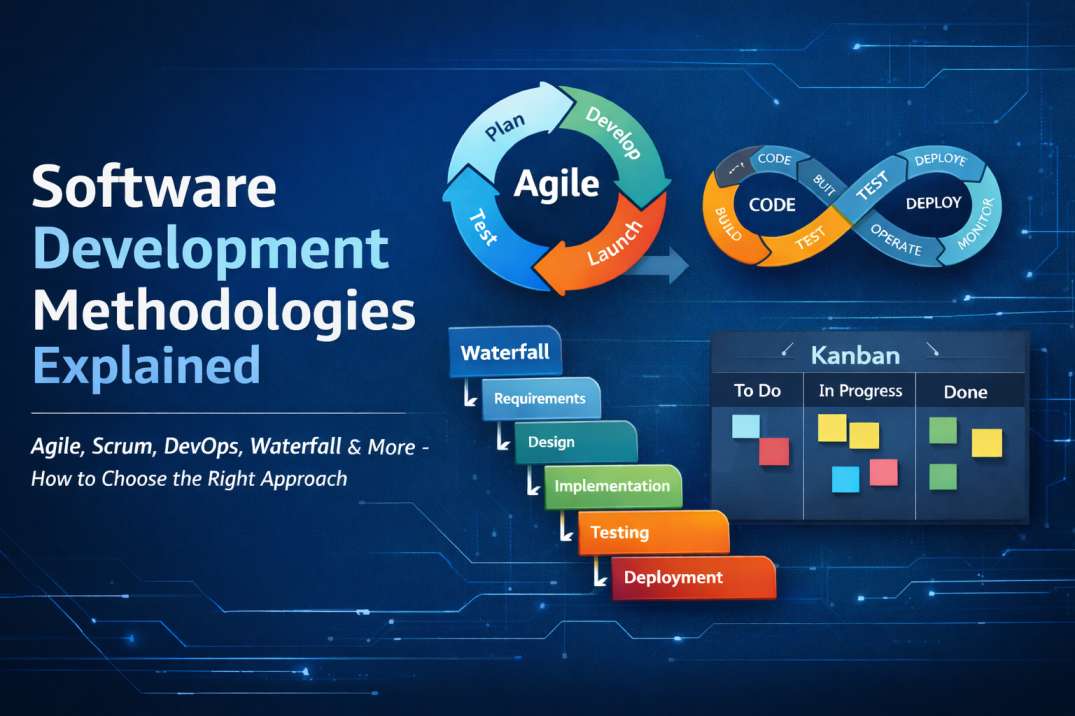
Agile development keeps you flexible and aligned with real user needs. (We follow it too!)
What a typical UK sprint cycle looks like for product development:
- 2-week development cycles
- Sprint planning & backlog refinement
- Daily standups
- Mid-sprint review
- Sprint retro at the end
📝 Founder checklist:
- Keep communication transparent and documented.
- Prioritise deliverables based on user feedback.
- Release small improvements frequently to stay agile.
_______________
Step #8. Test The Product Early & Test Often
Testing is where product ideas become validated products.
You wouldn’t want to deal with bugs on launch day.
What you must test in the newly developed product:
- Functionality
- User experience
- Edge cases
- Device compatibility
- Performance
Here are some useful UK testing groups:
- Beta testers from local startup communities (e.g., Tech Nation alumni).
- Industry-specific testers (FinTech, HealthTech, EdTech).
- Asking reddit groups for testing
If you want, you can opt for a testing service from Evangelist Apps. We run –
- Functional testing
- Load and performance tests
- Load and performance tests
- Device/browser checks
- Security reviews
This cuts down support issues and avoids public embarrassment.
📝 Founder checklist:
- Run smoke tests after each sprint.
- Track bugs using a versioned log.
- Collect structured user feedback.
_____________
Step #9. Launch and Measure What Matters
Launching is only the beginning. Your early metrics drive your long-term decisions.
Metrics Product developers must track:
- Activation rate
- Feature adoption
- User retention (D7, D30, D90)
- Daily/Monthly Active Users
- CAC vs. LTV
- Organic vs. paid acquisition
📝 Founder checklist:
- Soft-launch to a small UK customer segment first.
- Use Mixpanel, Amplitude or Analytics for tracking.
- Collect feedback & improve before public launch.
_____________
Step #10. Scale the Product Beyond MVP
Once your MVP shows traction, it’s time to scale responsibly.
How to scale products from MVP:
- Add infrastructure for performance
- Strengthen security & compliance (especially for UK FinTech/HealthTech)
- Expand feature sets based on validated insights
- Invest in marketing & automation
- Build long-term product vision
📝 Founder checklist:
- Add only features users actually request.
- Prepare for hiring (developers, designers, PMs).
- Explore integrations and partnerships inside the UK ecosystem.
- Ongoing updates
- Bug fixes
- Feature enhancements
- Usage and behaviour analytics
Bottom line
If you’re ready to turn your idea into a market-ready product, Evangelist Apps can accelerate every step from product development strategy to MVP to scale.
We’ve helped plenty of startups get from zero to live product without breaking the bank.
Our team has built products for leading UK organisations including NEO Bank, British Airways, Third Bridge and fast-growing startups who needed speed, clarity, and reliable execution.
We help founders validate quickly, reduce development risk, and ship features that actually move the needle.
If you want a product team that delivers with precision and momentum, let’s build your MVP together.
We provide full-stack product development service that covers strategy, design, build, launch, and support.
Ready to start building?
Talk to Evangelist apps and get a clear plan for your product.
Frequently Asked Questions
1. How long does it take to build an MVP in the UK?
Most UK startups build an MVP in 6–12 weeks, depending on complexity, features and team size.
2. How much does a typical MVP cost in the UK?
Budget ranges are:
- Simple mobile/web MVP: £15,000–£35,000
- SaaS MVP: £35,000–£120,000+
3. Do I need a full development team to start?
No. Many UK founders begin with:
- A product strategist
- A designer
- 1–2 developers
- Part-time QA
4. Should I raise funding before building?
Not always. Many early UK startups launch self-funded MVPs first to gain traction before approaching investors.
5. When should I scale the product?
Scale only after achieving:
- Strong retention
- Clear product–market fit signals
- Repeatable acquisition channels
6. Is custom development better than no-code for UK startups?
No-code is great for prototypes. Custom development is better when you need security, integrations, performance, or scalability.