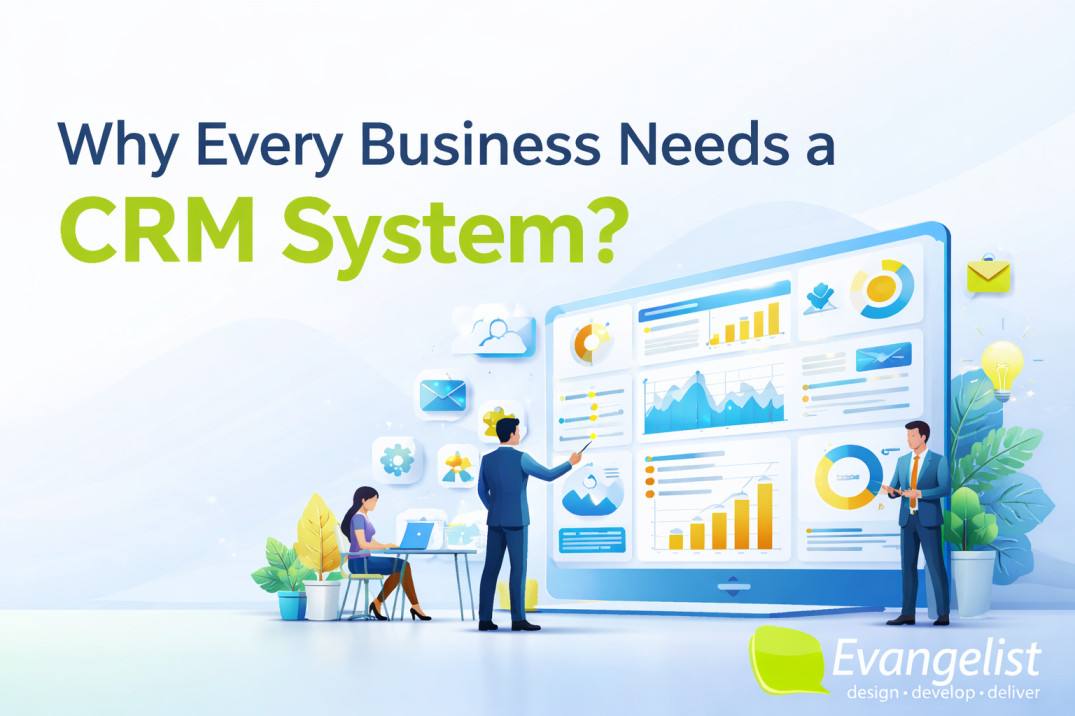


TL;DR: CRM systems help businesses centralize customer data, manage leads, and improve follow-ups, making operations more efficient. They provide better visibility, automation, and customer experience, which directly supports growth and retention. For complex needs, custom CRM systems offer a better fit by aligning with real business workflows.
Businesses sometimes do not lose deals only because of poor products or weak demand.
They lose deals because leads go cold, follow-ups slip, customer history gets buried, and teams work from different versions of the truth.
A CRM system fixes that by creating one shared place for customer data, sales activity, service history, and next-step actions.
According to the Salesforce State of Marketing Report, about 86% of marketers already use CRM systems, and only 31%of marketers are fully satisfied with their ability to unify data, which shows why the right CRM setup matters more than ever.
For growing companies and enterprise teams especially, the question is no longer whether to use a CRM system or not.
The real question is whether a standard setup is enough, or whether a custom CRM is needed to match the way the business actually works.
We will find that answer in this article.
What Are CRM Systems?
CRM stands for customer relationship management. CRM systems are software platforms that help businesses manage interactions with current and potential customers in one place. They store contact details, communication history, pipeline activity, service notes, and other customer data so teams can work from the same information.
A good CRM system acts like an operational layer for sales, support, and marketing. It helps teams see what happened, what should happen next, and where revenue or customer experience is being lost
What are the benefits of using CRM software for businesses?
- Centralized customer data – One system for contacts, conversations, deals, and history.
- Better follow-up & lead management – Assign owners, track next steps, and ensure no opportunity is missed.
- Clear sales pipeline visibility – Know what’s moving, what’s stuck, and what needs attention at any time.
- Marketing-to-revenue tracking – See which campaigns actually generate leads and conversions.
- Improved customer service – Access full customer context for faster, more consistent support.
- Workflow automation – Reduce manual tasks like reminders, updates, and task assignments.
- Accurate reporting & forecasting – Make decisions based on real-time pipeline and performance data.
- Scalable processes – Maintain consistency as teams, customers, and operations grow.
The Business Problems CRM Systems Solve
Problem #1) Lost leads.
Without a CRM, inbound leads can sit unassigned, follow-up can be delayed, and promising opportunities can disappear before a salesperson ever speaks to them.
A CRM system assigns ownership, timestamps activity, and keeps every lead visible from first touch to close.
Problem #2) Disconnected teams.
Sales, marketing, and customer support often work with different notes, different reports, and different assumptions.
CRM software breaks those silos by giving everyone the same customer record, which improves handoffs and reduces internal friction
Problem #3) Weak customer retention.
When a customer has to repeat themselves to every department, trust drops quickly.
CRM systems help teams see purchase history, past issues, preferences, and open tasks so service feels smoother and more personal
Problem #4) Poor visibility.
Leaders cannot improve what they cannot see.
CRM dashboards make it easier to review pipeline health, campaign performance, service response times, and customer trends, which turns guesswork into decision-making
Which Companies Can Adopt & Use CRM Systems?
Ideally, a CRM software can be adopted & used by companies and industries of all sizes.
It benefits large enterprises, small businesses, startups, and even non-profits, because any organization that communicates with customers needs a structured way to manage that relationship.
That is why CRM systems show up in retail, finance, healthcare, professional services, SaaS, logistics, and B2B operations.
The business model changes, but the need for clean customer history, fast follow-up, and measurable performance stays the same.
Top 8 Reasons Companies Should Use CRM Systems
1. To keep every customer record in one place
When customer data is scattered across email, spreadsheets, chat apps, and personal notes, teams waste time searching for information. A CRM centralizes contact details, communication history, deal status, support tickets, and tasks in one system.
This creates a single source of truth. Everyone sees the same record. That improves speed, reduces confusion, and lowers the risk of duplicated work.
2. To improve follow-up discipline
A lot of deals are not lost at the proposal stage. They are lost because nobody follows up properly.
CRM systems solve this by assigning ownership, tracking next actions, and sending reminders.
A good CRM makes follow-up visible. A custom CRM takes this further by matching follow-up logic to the actual sales process. For example:
- enterprise sales cycles with multiple decision-makers
- channel sales with partner handoffs
- consultative sales with long qualification stages
- subscription sales with renewal reminders
That kind of workflow is hard to manage in a generic tool.
3. To manage the sales pipeline more clearly
Sales teams need to know what is open, what is stalled, what needs attention, and what is likely to close. CRM systems make that possible through pipeline stages, opportunity tracking, activity logs, and forecasting dashboards.
Without a CRM, sales managers often depend on rep memory or manual reporting. That makes forecasting unreliable. With a CRM, pipeline health becomes easier to inspect and improve.
4. To connect marketing efforts with actual revenue
Marketing is only valuable when it contributes to revenue. CRM systems help businesses connect campaign data with lead quality, sales conversion, and customer value.
This is important because many businesses still measure marketing in isolation. They track clicks, impressions, and form fills, but not actual business outcomes. A CRM closes that gap.
A custom CRM is especially useful when marketing workflows are not standard, such as:
- account-based marketing
- industry-specific nurture journeys
- regional campaign routing
- multi-brand customer journeys
5. To improve customer service and retention
Customers do not care which internal team owns the problem. They care whether the problem is solved quickly and correctly. CRM systems help service teams see the customer’s full history before responding.
That means fewer repeated questions, faster resolutions, and a more professional experience. It also helps managers spot patterns in complaints, delays, and recurring issues.
Retention improves when service becomes consistent. That is one of the strongest arguments for CRM adoption.
6. To automate repetitive tasks
CRM systems reduce manual work by automating simple but important actions such as:
- lead assignment
- reminder creation
- follow-up emails
- status changes
- task notifications
- workflow approvals
- report generation
This is not just about saving time. It is about reducing human error. The more manual the process, the more likely something gets missed.
Custom CRM systems are better here because the automation can be built around the business process, not forced into a generic pattern.
7. To create better reporting and forecasting
Managers need more than activity volume. They need visibility into conversion rates, deal velocity, customer churn signals, team performance, and service bottlenecks.
A CRM system turns daily operational data into actionable reporting. That means leadership can make decisions based on real pipeline movement instead of guesswork.
In practice, this is where custom CRM systems often outperform ready-made tools. They can be designed around the exact KPIs the business cares about.
8. To scale without losing process quality
As a business grows, processes become harder to manage informally. More leads, more customers, more team members, more systems, and more handoffs create more friction.
A CRM gives structure to that growth. It creates repeatable steps, visible accountability, and cleaner operations. Without it, growth usually creates chaos before it creates efficiency.
For enterprise teams, this is one of the biggest reasons to invest in a custom CRM instead of forcing complex operations into a standard product.
Ready-made CRMs vs Custom CRMs: What should you opt for?
| Factor | Ready-made CRM | Custom CRM |
| Setup speed | Fast | Slower initially |
| Fit for complex workflows | Limited | Strong |
| Integration with legacy tools | Often restricted | Can be designed around existing systems |
| Reporting flexibility | Standard dashboards | Built around business KPIs |
| User adoption | Good for simple processes | Better for complex organizations when designed well |
| Scalability | Good up to a point | Strong long-term fit |
| Cost structure | Lower upfront | Higher upfront, better strategic fit |
| Business differentiation | Generic | Tailored to operations |
Case 1) When ready-made CRMs make sense
Ready-made CRMs are useful when the business has a simple sales process, standard reporting needs, and limited integration complexity.
They are often a good starting point for smaller teams or companies that want quick deployment.
Case 2) When custom CRMs make more sense
Custom CRMs are better when the business has:
- unique sales stages
- multiple departments touching the same account
- legacy systems that still matter
- complex approval workflows
- industry-specific reporting needs
- compliance-heavy operations
- multi-region or multi-brand structures
In our experience, building custom CRM solutions for over 15 years, we have seen that for enterprise teams, the real cost of a ready-made CRM is not just the license fee.
It is often the process of compromise.
Teams start bending their workflows to fit the software. That creates workarounds, duplicate systems, and low adoption.
A custom CRM removes that tension.
Why Custom CRM Systems Often Deliver Better Long-Term Value
Custom CRM systems matter when businesses need more than contact tracking.
They deliver stronger value when the company wants:
- deeper alignment with internal operations
- cleaner legacy system integration
- reporting based on real business KPIs
- tailored permissions and workflows
- higher user adoption across departments
- a system that supports growth instead of limiting it
That is why many companies eventually move from a standard tool to a custom-built solution.
The business grows beyond the template.
Custom CRM Development Services for SMEs and Enterprises
For businesses that have outgrown spreadsheets or generic CRM tools, Evangelist Apps offers reliable and secure custom CRM development designed to scale with the business.
We focus on centralizing sales, marketing, and customer data, improving visibility, and building a CRM that fits the way the business actually works.
What this means in practice
- CRM strategy and consulting to define the right workflow before development starts.
- Client lifecycle tracking so the full customer journey is visible from lead generation to post-sale engagement.
- Sales and marketing automation to reduce manual follow-ups and improve consistency.
- Internal collaboration so teams, tools, and data stay aligned.
- Reporting and customer health metrics for real-time performance visibility
Best fit for
- SMEs that need a CRM built around their process, not a generic template
- Enterprises that need stronger control over workflows, reporting, and integration
- Teams using Dynamics 365 or Salesforce who want a more tailored CRM implementation
- Businesses that want a custom CRM partner for development, deployment, and long-term support
Book a FREE meeting with Evangelist Apps to discuss your custom CRM development needs and explore the right solution for your team.
F.A.Qs
Q. What are CRM systems?
CRM systems are software tools that help businesses manage customer relationships in one place. They store contact details, sales activity, communication history, service notes, and pipeline data so teams can work from the same information.
Q. Why do companies use CRM systems?
Companies use CRM systems to stay organized, improve follow-up, track sales opportunities, and give customers a better experience. A CRM reduces missed leads, removes data silos, and helps teams make faster, more accurate decisions.
Q. What are CRM systems used for?
CRM systems are used for lead management, sales pipeline tracking, customer support, reporting, marketing coordination, and workflow automation. They help businesses manage the full customer journey from first contact to repeat purchase or renewal.
Q. How do you integrate CRM with legacy systems?
Integrating a CRM with legacy systems starts with mapping data, identifying the source of truth, and deciding what needs to sync in real time. The safest approach is to clean the data first, test the connection in phases, and make sure workflows, permissions, and reporting still work correctly across both systems.
Q. What are the 4 types of CRM systems?
The four main types of CRM systems are operational, analytical, collaborative, and strategic. Operational CRM supports daily sales and service tasks, analytical CRM focuses on data and reporting, collaborative CRM improves teamwork, and strategic CRM supports long-term customer relationship management.
Q. Which companies use CRM systems?
Companies of all sizes use CRM systems, including startups, small businesses, mid-sized firms, and large enterprises. They are common in industries such as retail, finance, healthcare, SaaS, professional services, logistics, and manufacturing because every business that deals with customers needs structure and visibility.
Q. Why are custom CRM systems useful for businesses?
Custom CRM systems are useful because they can be built around a company’s exact workflow instead of forcing teams to adapt to generic software. They are especially valuable for businesses with complex sales processes, legacy tools, multi-team collaboration, or industry-specific reporting needs.
Q. Why do businesses need CRM systems?
Businesses need CRMs to keep leads, customer history, and follow-ups in one place. A good CRM improves visibility, automation, and customer retention across the sales cycle.